# News Source (Borneo Post)
Published : Wednesday August 19, 2015
MIRI: The carcass of a dolphin was found washed ashore the beach at Luak Esplanade here yesterday.
The carcass with its tail cut off was found by members of the public around 1.00pm.
A team of fire fighters from the district Fire and Rescue Department lead by Frederick Aok rushed to the scene to retrieve the carcass after being informed of the discovery.
The carcass was taken to the fire station and it will be handed over the relevant authority for
further action.
Total Pageviews
Thursday, August 20, 2015
Monday, August 10, 2015
Sematan, where myths and land rise to meet the sea. Lundu, Sarawak.
# News Source (Borneo Post)
Published : Tuesday August 11, 2015
LUNDU: Sematan is hard to miss – it is the passageway to Tg Datu the westernmost tip of Sarawak, north of Kuching, where land meets the sea.
For the road-weary traveller it is a place to soak in the sun on beaches where myths spring forth from the blue depths of the South China Sea.
Sematan is within Lundu District, 105km away from Kuching city. It is located by the sea and home to many quaint fishing villages.
The name ‘Sematan’ (San Ma Dan in Chinese) means ‘Three Red Horses’. Many local Chinese believe their forefathers were enchanted by three red-haired stallions cantering in the area.
Ironically, Sematan although dubbed the ‘land of horses’ is actually much more blessed by the vast sea surrounding it.
Away from the Sematan beach, as told by 70-year-old Pemanca Lo Sin Li, are two islands – Talang-Talang – resembling turtle shells and which coincidently are the breeding spot for the many turtles found in the South China Sea.
“Each year, hundreds of turtles will lay their eggs on the two islands and a long time ago, there was a festival which was celebrated annually by the folk of Sematan.
During the festival, the people will gather on the two islands and pelt each other with turtle eggs found there,” said Lo who has been Lundu’s Pemanca for seven years.
“This was a ritual to worship the sea god but since the two islands have been protected by the government, the festival also came to an end.”
Lo said Sematan is blessed with the rich waters where seafood is joyfully abundant. He explained that jellyfish can be seen floating on the shores of Sematan every year from February to March and from April to May, whereupon people would be on the move to harvest small shrimps.
Deep sea angling too lures cityfolk to these unspoilt spots, where for RM800 a trip, young man Alias Sudin runs a boat hire and fishing expedition based at the handicraft centre of Kpg Siru, a small village in Sematan.
He ferries five to six customers on his 35-foot boat for the one-hour ride to Tg Datu, the
northernmost tip of Sarawak bordering Indonesian Kalimantan.
“It isn’t costly,” said Alias. “We have to buy benzene for boat fuel at RM2.05 per litre. And not from here but from Lundu bazaar, 30km away, ever since Petronas closed its supply at Sematan, and I use two outboard engines for the 10km boat trip.”
He added that weekend anglers often hire his boat, advertised by only word of mouth.
Aside from the rare shark that boatman Alias has spied on – “I’ve seen 40kg sharks but they are not man-eaters” – what else may entice the tourist at Tg Datu?
But by some wild stretch of the imagination, you can fathom the famous legend of the seven seas – the elusive mermaid of yore.
A wide-eyed Alias daringly relates the legend of one of the most endearing tales from seafarers who swear by Neptune that the mermaid is indeed real.
“In the 80s, some people in Tg Datu saw it (mermaid). Half human, half fish from waist down, with tailfin,” contends Alias.
“But the tale came from an old person who has long died.”
In the midst of myths to grip tourists for conversations after the searing sunsets, Sematan has a dozen homestays and four beach resorts.
Until the state’s blueprint for a tourism belt becomes reality, the remoteness is a meaningful getaway from four-star hotels.
- Borneo Post
Published : Tuesday August 11, 2015
LUNDU: Sematan is hard to miss – it is the passageway to Tg Datu the westernmost tip of Sarawak, north of Kuching, where land meets the sea.
For the road-weary traveller it is a place to soak in the sun on beaches where myths spring forth from the blue depths of the South China Sea.
Sematan is within Lundu District, 105km away from Kuching city. It is located by the sea and home to many quaint fishing villages.
The name ‘Sematan’ (San Ma Dan in Chinese) means ‘Three Red Horses’. Many local Chinese believe their forefathers were enchanted by three red-haired stallions cantering in the area.
Ironically, Sematan although dubbed the ‘land of horses’ is actually much more blessed by the vast sea surrounding it.
Away from the Sematan beach, as told by 70-year-old Pemanca Lo Sin Li, are two islands – Talang-Talang – resembling turtle shells and which coincidently are the breeding spot for the many turtles found in the South China Sea.
“Each year, hundreds of turtles will lay their eggs on the two islands and a long time ago, there was a festival which was celebrated annually by the folk of Sematan.
During the festival, the people will gather on the two islands and pelt each other with turtle eggs found there,” said Lo who has been Lundu’s Pemanca for seven years.
“This was a ritual to worship the sea god but since the two islands have been protected by the government, the festival also came to an end.”
Lo said Sematan is blessed with the rich waters where seafood is joyfully abundant. He explained that jellyfish can be seen floating on the shores of Sematan every year from February to March and from April to May, whereupon people would be on the move to harvest small shrimps.
Deep sea angling too lures cityfolk to these unspoilt spots, where for RM800 a trip, young man Alias Sudin runs a boat hire and fishing expedition based at the handicraft centre of Kpg Siru, a small village in Sematan.
He ferries five to six customers on his 35-foot boat for the one-hour ride to Tg Datu, the
northernmost tip of Sarawak bordering Indonesian Kalimantan.
“It isn’t costly,” said Alias. “We have to buy benzene for boat fuel at RM2.05 per litre. And not from here but from Lundu bazaar, 30km away, ever since Petronas closed its supply at Sematan, and I use two outboard engines for the 10km boat trip.”
He added that weekend anglers often hire his boat, advertised by only word of mouth.
Aside from the rare shark that boatman Alias has spied on – “I’ve seen 40kg sharks but they are not man-eaters” – what else may entice the tourist at Tg Datu?
But by some wild stretch of the imagination, you can fathom the famous legend of the seven seas – the elusive mermaid of yore.
A wide-eyed Alias daringly relates the legend of one of the most endearing tales from seafarers who swear by Neptune that the mermaid is indeed real.
“In the 80s, some people in Tg Datu saw it (mermaid). Half human, half fish from waist down, with tailfin,” contends Alias.
“But the tale came from an old person who has long died.”
In the midst of myths to grip tourists for conversations after the searing sunsets, Sematan has a dozen homestays and four beach resorts.
Until the state’s blueprint for a tourism belt becomes reality, the remoteness is a meaningful getaway from four-star hotels.
- Borneo Post
Sunday, August 2, 2015
Iconic species for eco-tourism loses more habitat in Kinabatangan. Sabah, Borneo.
# News Source (Borneo Post)
Published : Thursday July 30, 2015
KINABATANGAN: Gambu was once a “happy” proboscis monkey living with his group in the riparian forest of the Kinabatangan and one of its tributaries, Sungai Sukau.
But one morning, half of his home range was cleared, all trees (including some parts of the riparian reserve) were felt to leave place (soon) to a rubber plantation.
Gambu (short for Gambunan who was a Dusun group leader from Tambunan) is a male proboscis monkey that was set up with a satellite collar in June 2012 as part of a collaborative project between Danau Girang Field Centre (DGFC) and Sabah Wildlife Department, funded by Sime Darby Foundation.
DGFC director Dr Benoit Goossens said the aim of the satellite tagging programme is to understand the ranging patterns of proboscis monkeys and the factors impacting their movements and density in order to determine the adequate amount of habitat available in order to sustain a continuous viable population in the Kinabatangan region.
“With the continuous degradation and loss of habitat in the Kinabatangan, I wonder whether the proboscis monkey and other wildlife have a chance to sustain viable populations in this iconic eco-touristic jewel that is the Kinabatangan,” he said.
“I understand that the land that has been cleared is native land but what about the riparian reserve that was cleared at the corner of the Kinabatangan River and Sungai Sukau, and along the latter?” he asked.
Goossens said if the government is not imposing a moratorium on further land conversion in the Kinabatangan, Sabah will lose one of its most iconic touristic assets.
According to the director, the Kinabatangan Wildlife Sanctuary is one of the best places in Borneo to encounter Bornean elephants, orangutans, proboscis monkeys, estuarine crocodiles, Storm storks, rhinoceros hornbills and hundreds of other species.
“If people continue converting the land along the river, legally or illegally, tourists will desert the region,” he said.
“When reading Section 38 of the Sabah Wildlife Enactment 1997, it says that any person who intends to clear any land in natural forest for cultivation shall not less than 30 days prior to the intended commencement of such clearance notify the director of such intention,” pointed out Goossens.
“The director upon receipt of such notification shall cause an inspection of such land to be carried out and notify the person who gave the notification that the clearance operation may proceed or an animal rescue operation shall be necessary prior to the commencement or during the clearance or logging operations … I believe that the director of Sabah Wildlife Department did not receive such notice and was not given the opportunity to rescue animals within the area,” he added.
Goossens questioned the meaning behind the Kinabatangan Corridor of Life concept, when every year, bits by bits, the forest is cleared along the Kinabatangan River.
“How ironic it is when organisations such as NestlĂ© and their project RiLeaf, Sime Darby Foundation, MESCOT, WWF-Malaysia, HUTAN, DGFC, BCT, KiTA spend millions of ringgit and hours of manpower to restore riparian reserves and deforested lands when at the same time forest is still cleared, riparian reserves and wildlife habitat destroyed,” he said.
- Borneo Post
Published : Thursday July 30, 2015
![]() |
| The latest drone image of the area, taken July 2015, with the 2012 points on top, showing that half of Gambu’s home range has been cleared. |
![]() |
| A single tree remaining in an area commonly used by proboscis monkeys to cross the tributary. |
But one morning, half of his home range was cleared, all trees (including some parts of the riparian reserve) were felt to leave place (soon) to a rubber plantation.
Gambu (short for Gambunan who was a Dusun group leader from Tambunan) is a male proboscis monkey that was set up with a satellite collar in June 2012 as part of a collaborative project between Danau Girang Field Centre (DGFC) and Sabah Wildlife Department, funded by Sime Darby Foundation.
DGFC director Dr Benoit Goossens said the aim of the satellite tagging programme is to understand the ranging patterns of proboscis monkeys and the factors impacting their movements and density in order to determine the adequate amount of habitat available in order to sustain a continuous viable population in the Kinabatangan region.
“With the continuous degradation and loss of habitat in the Kinabatangan, I wonder whether the proboscis monkey and other wildlife have a chance to sustain viable populations in this iconic eco-touristic jewel that is the Kinabatangan,” he said.
“I understand that the land that has been cleared is native land but what about the riparian reserve that was cleared at the corner of the Kinabatangan River and Sungai Sukau, and along the latter?” he asked.
Goossens said if the government is not imposing a moratorium on further land conversion in the Kinabatangan, Sabah will lose one of its most iconic touristic assets.
According to the director, the Kinabatangan Wildlife Sanctuary is one of the best places in Borneo to encounter Bornean elephants, orangutans, proboscis monkeys, estuarine crocodiles, Storm storks, rhinoceros hornbills and hundreds of other species.
“If people continue converting the land along the river, legally or illegally, tourists will desert the region,” he said.
“When reading Section 38 of the Sabah Wildlife Enactment 1997, it says that any person who intends to clear any land in natural forest for cultivation shall not less than 30 days prior to the intended commencement of such clearance notify the director of such intention,” pointed out Goossens.
“The director upon receipt of such notification shall cause an inspection of such land to be carried out and notify the person who gave the notification that the clearance operation may proceed or an animal rescue operation shall be necessary prior to the commencement or during the clearance or logging operations … I believe that the director of Sabah Wildlife Department did not receive such notice and was not given the opportunity to rescue animals within the area,” he added.
Goossens questioned the meaning behind the Kinabatangan Corridor of Life concept, when every year, bits by bits, the forest is cleared along the Kinabatangan River.
“How ironic it is when organisations such as NestlĂ© and their project RiLeaf, Sime Darby Foundation, MESCOT, WWF-Malaysia, HUTAN, DGFC, BCT, KiTA spend millions of ringgit and hours of manpower to restore riparian reserves and deforested lands when at the same time forest is still cleared, riparian reserves and wildlife habitat destroyed,” he said.
- Borneo Post
Friday, July 31, 2015
Internet 'hotspot' on a treehouse. Kampung Bobak Sejinjang, Singgai, Bau, Sarawak
# News Source (Borneo Post)
Published : Friday July 31, 2015
KUCHING: When he was a student last year, Lawrence, 18, had to climb two metres up a
tree to do his homework and school revision in an ‘Internet hotspot treehouse’ near house.
The Internet hotspot treehouse, which he personally built, was the only spot he could use his notebook to connect to the internet as his village Kampung Bobak Sejinjang, Singgai, Bau still does not have Internet coverage.
When by chance he discovered one particular spot near a tree in his house compound which can receive some Internet coverage, probably transmitted from a nearby village, he decided to build a house up on the tree to get better transmission.
Lawrence’s father Kerbun Kira when contacted yesterday said the treehouse built two metres above the ground was his son’s initiative and it took him about a week to finish without help from anyone.
“There is no Internet coverage at home so he had to search for the coverage outside the house and he found a location where Internet coverage is available. That is where he built his treehouse,” he said.
According to Kerbun, Lawrence did his school work and research in his treehouse until he completed his Form 5 last year.
Lawrence, the second of four siblings, is now working but the treehouse still serves its purpose and it is now used by his two other siblings who are studying at Universiti Malaysia Sarawak and SMK Lake in Bau.
PKR Mas Gading branch chief Boniface Willy Tumek, who chanced upon this unique wooden ‘Internet hotspot’ structure recently, found out that the village (Bobak Sejinjang) was the only village in Singgai that is not a ‘wireless village’ (kampung tanpa wayar).
“Internet connectivity is a major issue in many villages in Bau. In villages like Stass and Skibang, the people cannot even use their mobile phones despite there being a Sacofa telecommunication tower there.”
According to him, the tower was built in March this year but so far, telco companies have been reluctant to extend their coverage there.
With Internet connectivity being a major issue in rural areas like Bau, it is doubtful that students in these areas could benefit from the 1BestariNet, a virtual learning environment (VLE) initiated by the Education Ministry to provide high speed Internet access to every school in the country. The 1BestariNet project is estimated to cost about RM4.1 billion.
According to the Education Ministry’s Malaysian Education Blueprint annual report 2014, a total of 6,623 schools had been connected to high speed wireless 4G Internet by end of 2014, while another 2,261 school were connected via
Asymmetric Digital Subcriber Line (ADSL) and Very Small Aperture Terminal (VSAT) technology.
The report also said the 1BestariNet network required the construction of telecommunication towers to support high speed 4G connectivity. The ministry is working towards obtaining the cooperation of local authorities in building these towers.
As an interim measure, the remaining schools are currently connected to other Internet Service Providers (ISP). These schools will migrate to 1BestariNet in Phase 2 of the project this year.
- Borneo Post
Published : Friday July 31, 2015
KUCHING: When he was a student last year, Lawrence, 18, had to climb two metres up a
tree to do his homework and school revision in an ‘Internet hotspot treehouse’ near house.
The Internet hotspot treehouse, which he personally built, was the only spot he could use his notebook to connect to the internet as his village Kampung Bobak Sejinjang, Singgai, Bau still does not have Internet coverage.
When by chance he discovered one particular spot near a tree in his house compound which can receive some Internet coverage, probably transmitted from a nearby village, he decided to build a house up on the tree to get better transmission.
Lawrence’s father Kerbun Kira when contacted yesterday said the treehouse built two metres above the ground was his son’s initiative and it took him about a week to finish without help from anyone.
“There is no Internet coverage at home so he had to search for the coverage outside the house and he found a location where Internet coverage is available. That is where he built his treehouse,” he said.
According to Kerbun, Lawrence did his school work and research in his treehouse until he completed his Form 5 last year.
Lawrence, the second of four siblings, is now working but the treehouse still serves its purpose and it is now used by his two other siblings who are studying at Universiti Malaysia Sarawak and SMK Lake in Bau.
PKR Mas Gading branch chief Boniface Willy Tumek, who chanced upon this unique wooden ‘Internet hotspot’ structure recently, found out that the village (Bobak Sejinjang) was the only village in Singgai that is not a ‘wireless village’ (kampung tanpa wayar).
“Internet connectivity is a major issue in many villages in Bau. In villages like Stass and Skibang, the people cannot even use their mobile phones despite there being a Sacofa telecommunication tower there.”
According to him, the tower was built in March this year but so far, telco companies have been reluctant to extend their coverage there.
With Internet connectivity being a major issue in rural areas like Bau, it is doubtful that students in these areas could benefit from the 1BestariNet, a virtual learning environment (VLE) initiated by the Education Ministry to provide high speed Internet access to every school in the country. The 1BestariNet project is estimated to cost about RM4.1 billion.
According to the Education Ministry’s Malaysian Education Blueprint annual report 2014, a total of 6,623 schools had been connected to high speed wireless 4G Internet by end of 2014, while another 2,261 school were connected via
Asymmetric Digital Subcriber Line (ADSL) and Very Small Aperture Terminal (VSAT) technology.
The report also said the 1BestariNet network required the construction of telecommunication towers to support high speed 4G connectivity. The ministry is working towards obtaining the cooperation of local authorities in building these towers.
As an interim measure, the remaining schools are currently connected to other Internet Service Providers (ISP). These schools will migrate to 1BestariNet in Phase 2 of the project this year.
- Borneo Post
Saturday, July 25, 2015
Python caught by villagers of Ensurai longhouse. Limbang, Sarawak.
Friday, July 10, 2015
Wednesday, April 15, 2015
Pot-Bellied Seahorse (Hippocampus Abdominalis)
List of Fish
The big-belly seahorse or pot-bellied seahorse, Hippocampus abdominalis, is one of the largest seahorse species in the world with a length of up to 35 cm, and is the largest in Australia.[1] Seahorses are members of the Syngnathidae family, and are teleost fishes. They are found in southeast Australia and New Zealand, and are listed on Appendix II of CITES. (From Wikipedia)
![]() |
| Image Source |
![]() |
| Image Source |
![]() |
| Image Source |
![]() |
| Image Source |
Friday, April 10, 2015
Kelp Greenling (Hexagrammos Decagrammus)
List of Fish
Hexagrammos decagrammus, the Kelp Greenling, is a species of greenling that occurs in rocky nearshore areas of the northern Pacific especially around Alaska and is common on kelp beds and on sand bottoms. They feed on crustaceans, polychaete worms, brittle stars, mollusks, and small fishes. The young are food for large predators such as Ling cod and halibut. They are frequently caught by hook and line, fishing from shore or skiff, as well as speared by divers. This fish was caught on the show Robson's Extreme Fishing Challenge. (From Wikipedia)
![]() |
| Image Source |
![]() |
| Image Source |
![]() |
| Image Source |
![]() |
| Image Source |
![]() |
| Image Source |
Horn Shark (Heterodontus Francisci)
List of Fish
The horn shark (Heterodontus francisci) is a species of bullhead shark, in the family Heterodontidae. It is endemic to the coastal waters off the western coast of North America, from California to the Gulf of California. Young sharks are segregated spatially from the adults, with the former preferring deeper sandy flats and the latter preferring shallower rocky reefs or algal beds. A small species typically measuring 1 m (3.3 ft) in length, the horn shark can be recognized by a short, blunt head with ridges over its eyes, two high dorsal fins with large spines, and a brown or gray coloration with many small dark spots. (From Wikipedia)
![]() |
| Image Source |
![]() |
| Image Source |
![]() |
| Image Source |
![]() |
| Image Source |
![]() |
| Image Source |
![]() |
| Image Source |
Giant Kelpfish Heterostichus Rostratus
List of Fish
The Giant Kelpfish (Heterostichus rostratus) is a species of clinid native to the west coast of North America where it is found from California to southern Baja California. It inhabits rocky areas with kelp and other large seaweeds. Its diet consists of small crustaceans, mollusks and fishes. This species can reach a maximum size of 61 centimetres (24 in) TL and has been reported to live for 4 years. It can also be found in the aquarium trade. It is currently the only known member of its genus. (From Wikipedia)
![]() |
| Image Source |
![]() |
| Image Source |
![]() |
| Image Source |
![]() |
| Image Source |
Monday, April 6, 2015
Zebra Perch (Hermosilla Azurea)
List of Fish
Hermosilla azurea, the zebra-perch sea chub, is a species of sea chub native to the Pacific coast of North America where it occurs from Monterey Bay, California to the Gulf of California. It is a shallow-water species, found in near-shore waters down to a depth of 8 metres (26 ft). This species forms schools and is usually found in association with the Panamic sergeant major (Abudefduf troschelii). This species grows to a length of 45 centimetres (18 in) TL. This species is the only known member of its genus. (From Wikipedia)
![]() |
| Image Source |
![]() |
| Image Source |
Red Irish Lord (Hemilepidotus Hemilepidotus)
List of Fish
Hemilepidotus hemilepidotus, commonly known as the red Irish lord (US) or bullhead, is a species of fish in the family Cottidae. It is found in the northern Pacific ocean, from Russia to Alaska and as far south as Monterey Bay. Hemilepidotus hemilepidotus has a maximum recorded length of 51.0 cm, and a maximum recorded weight of 1,110 grams.[2] It is predominantly red, with white, brown and black mottling and has 10-12 dorsal spines, 18-20 dorsal soft rays and 35 vertebrae.
(From Wikipedia)
Hemilepidotus hemilepidotus, commonly known as the red Irish lord (US) or bullhead, is a species of fish in the family Cottidae. It is found in the northern Pacific ocean, from Russia to Alaska and as far south as Monterey Bay. Hemilepidotus hemilepidotus has a maximum recorded length of 51.0 cm, and a maximum recorded weight of 1,110 grams.[2] It is predominantly red, with white, brown and black mottling and has 10-12 dorsal spines, 18-20 dorsal soft rays and 35 vertebrae.
(From Wikipedia)
![]() |
| Image Source |
![]() |
| Image Source |
![]() |
| Image Source |
![]() |
| Image Source |
![]() |
| Image Source |
Longfin Pennantfish (Heniochus Acuminatus)
List of Fish
The pennant coralfish (Heniochus acuminatus), also known as the longfin bannerfish or coachman, is a tropical fish of the family Chaetodontidae. It is also known colloquially as the "poor man's Moorish idol". (From Wikipedia)
![]() |
| Image Source |
![]() |
| Image Source |
![]() |
| Image Source |
![]() |
| Image Source |
![]() |
| Image Source List of Fish |
Epaulette Shark (Hemiscyllium Ocellatum)
List of Fish
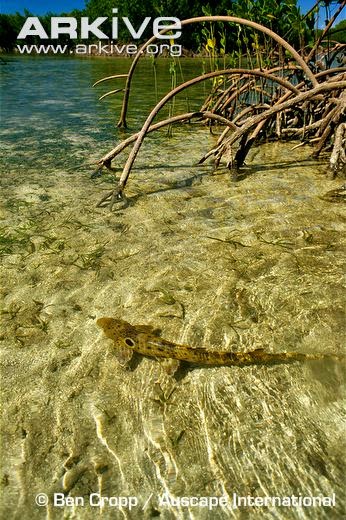
The epaulette shark (Hemiscyllium ocellatum) is a species of longtailed carpet shark, family Hemiscylliidae, found in shallow, tropical waters off Australia and New Guinea (and possibly elsewhere). The common name of this shark comes from the very large, white-margined black spot behind each pectoral fin, which are reminiscent of military epaulettes. A small species usually under 1 m (3.3 ft) long, the epaulette shark has a slender body with a short head and broad, paddle-shaped paired fins. The caudal peduncle (to which the tail fin is attached) comprises over half the shark's length. Adults are light brown above, with scattered darker spots and indistinct saddles.
(From Wikipedia)
The epaulette shark (Hemiscyllium ocellatum) is a species of longtailed carpet shark, family Hemiscylliidae, found in shallow, tropical waters off Australia and New Guinea (and possibly elsewhere). The common name of this shark comes from the very large, white-margined black spot behind each pectoral fin, which are reminiscent of military epaulettes. A small species usually under 1 m (3.3 ft) long, the epaulette shark has a slender body with a short head and broad, paddle-shaped paired fins. The caudal peduncle (to which the tail fin is attached) comprises over half the shark's length. Adults are light brown above, with scattered darker spots and indistinct saddles.
(From Wikipedia)
![]() |
| Image Source |
![]() |
| Image Source |
![]() |
| Image Source |
![]() |
| Image Source |
![]() |
| Image Source |
Subscribe to:
Posts (Atom)
Popular Post
-
# News Source (Utusan Borneo) Published : February 20, 2017 Paul menunjukkan mempaik yang menyerupai ular sawa. Paul menunjukkan h...


.jpg)


.jpg)