Total Pageviews

Friday, July 31, 2015

Internet 'hotspot' on a treehouse. Kampung Bobak Sejinjang, Singgai, Bau, Sarawak

# News Source (Borneo Post)
Published : Friday July 31, 2015
KUCHING: When he was a student last year, Lawrence, 18, had to climb two metres up a 
tree to do his homework and school revision in an ‘Internet hotspot treehouse’ near house.

The Internet hotspot treehouse, which he personally built, was the only spot he could use his notebook to connect to the internet as his village Kampung Bobak Sejinjang, Singgai, Bau still does not have Internet coverage.

When by chance he discovered one particular spot near a tree in his house compound which can receive some Internet coverage, probably transmitted from a nearby village, he decided to build a house up on the tree to get better transmission.

Lawrence’s father Kerbun Kira when contacted yesterday said the treehouse built two metres above the ground was his son’s initiative and it took him about a week to finish without help from anyone.

“There is no Internet coverage at home so he had to search for the coverage outside the house and he found a location where Internet coverage is available. That is where he built his treehouse,” he said.

According to Kerbun, Lawrence did his school work and research in his treehouse until he completed his Form 5 last year.

Lawrence, the second of four siblings, is now working but the treehouse still serves its purpose and it is now used by his two other siblings who are studying at Universiti Malaysia Sarawak and SMK Lake in Bau.

PKR Mas Gading branch chief Boniface Willy Tumek, who chanced upon this unique wooden ‘Internet hotspot’ structure recently, found out that the village (Bobak Sejinjang) was the only village in Singgai that is not a ‘wireless village’ (kampung tanpa wayar).

“Internet connectivity is a major issue in many villages in Bau. In villages like Stass and Skibang, the people cannot even use their mobile phones despite there being a Sacofa telecommunication tower there.”

According to him, the tower was built in March this year but so far, telco companies have been reluctant to extend their coverage there.

With Internet connectivity being a major issue in rural areas like Bau, it is doubtful that students in these areas could benefit from the 1BestariNet, a virtual learning environment (VLE) initiated by the Education Ministry to provide high speed Internet access to every school in the country. The 1BestariNet project is estimated to cost about RM4.1 billion.

According to the Education Ministry’s Malaysian Education Blueprint annual report 2014, a total of 6,623 schools had been connected to high speed wireless 4G Internet by end of 2014, while another 2,261 school were connected via
Asymmetric Digital Subcriber Line (ADSL) and Very Small Aperture Terminal (VSAT) technology.

The report also said the 1BestariNet network required the construction of telecommunication towers to support high speed 4G connectivity. The ministry is working towards obtaining the cooperation of local authorities in building these towers.

As an interim measure, the remaining schools are currently connected to other Internet Service Providers (ISP). These schools will migrate to 1BestariNet in Phase 2 of the project this year.


- Borneo Post

Wednesday, April 15, 2015

Pot-Bellied Seahorse (Hippocampus Abdominalis)

List of Fish
The big-belly seahorse or pot-bellied seahorse, Hippocampus abdominalis, is one of the largest seahorse species in the world with a length of up to 35 cm, and is the largest in Australia.[1] Seahorses are members of the Syngnathidae family, and are teleost fishes. They are found in southeast Australia and New Zealand, and are listed on Appendix II of CITES. (From Wikipedia)
Image Source

Image Source

Image Source

Image Source

Friday, April 10, 2015

Kelp Greenling (Hexagrammos Decagrammus)

List of Fish
Hexagrammos decagrammus, the Kelp Greenling, is a species of greenling that occurs in rocky nearshore areas of the northern Pacific especially around Alaska and is common on kelp beds and on sand bottoms. They feed on crustaceans, polychaete worms, brittle stars, mollusks, and small fishes. The young are food for large predators such as Ling cod and halibut. They are frequently caught by hook and line, fishing from shore or skiff, as well as speared by divers. This fish was caught on the show Robson's Extreme Fishing Challenge. (From Wikipedia)
Image Source

Image Source

Image Source

Image Source

Image Source

Horn Shark (Heterodontus Francisci)

List of Fish
The horn shark (Heterodontus francisci) is a species of bullhead shark, in the family Heterodontidae. It is endemic to the coastal waters off the western coast of North America, from California to the Gulf of California. Young sharks are segregated spatially from the adults, with the former preferring deeper sandy flats and the latter preferring shallower rocky reefs or algal beds. A small species typically measuring 1 m (3.3 ft) in length, the horn shark can be recognized by a short, blunt head with ridges over its eyes, two high dorsal fins with large spines, and a brown or gray coloration with many small dark spots. (From Wikipedia)
Image Source

Image Source

Image Source

Image Source

Image Source

Image Source

Giant Kelpfish Heterostichus Rostratus

List of Fish
The Giant Kelpfish (Heterostichus rostratus) is a species of clinid native to the west coast of North America where it is found from California to southern Baja California. It inhabits rocky areas with kelp and other large seaweeds. Its diet consists of small crustaceans, mollusks and fishes. This species can reach a maximum size of 61 centimetres (24 in) TL and has been reported to live for 4 years. It can also be found in the aquarium trade. It is currently the only known member of its genus. (From Wikipedia)
Image Source

Image Source

Image Source

Image Source

Monday, April 6, 2015

Zebra Perch (Hermosilla Azurea)

List of Fish
Hermosilla azurea, the zebra-perch sea chub, is a species of sea chub native to the Pacific coast of North America where it occurs from Monterey Bay, California to the Gulf of California. It is a shallow-water species, found in near-shore waters down to a depth of 8 metres (26 ft). This species forms schools and is usually found in association with the Panamic sergeant major (Abudefduf troschelii). This species grows to a length of 45 centimetres (18 in) TL. This species is the only known member of its genus. (From Wikipedia)
Image Source

Image Source


Rock Wrasse (Halichoeres Semicinctus)

List of Fish
Image Source

Image Source

Image Source

Image Source


Red Irish Lord (Hemilepidotus Hemilepidotus)

List of Fish
Hemilepidotus hemilepidotus, commonly known as the red Irish lord (US) or bullhead, is a species of fish in the family Cottidae. It is found in the northern Pacific ocean, from Russia to Alaska and as far south as Monterey Bay. Hemilepidotus hemilepidotus has a maximum recorded length of 51.0 cm, and a maximum recorded weight of 1,110 grams.[2] It is predominantly red, with white, brown and black mottling and has 10-12 dorsal spines, 18-20 dorsal soft rays and 35 vertebrae.  
(From Wikipedia)
Image Source

Image Source

Image Source

Image Source

Image Source

Longfin Pennantfish (Heniochus Acuminatus)

List of Fish
The pennant coralfish (Heniochus acuminatus), also known as the longfin bannerfish or coachman, is a tropical fish of the family Chaetodontidae. It is also known colloquially as the "poor man's Moorish idol". (From Wikipedia)
Image Source

Image Source

Image Source

Image Source

Image Source

List of Fish

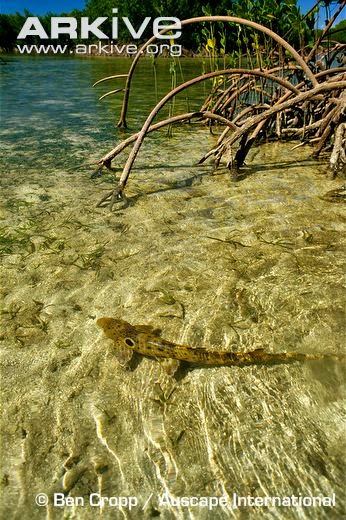
Epaulette Shark (Hemiscyllium Ocellatum)

List of Fish
The epaulette shark (Hemiscyllium ocellatum) is a species of longtailed carpet shark, family Hemiscylliidae, found in shallow, tropical waters off Australia and New Guinea (and possibly elsewhere). The common name of this shark comes from the very large, white-margined black spot behind each pectoral fin, which are reminiscent of military epaulettes. A small species usually under 1 m (3.3 ft) long, the epaulette shark has a slender body with a short head and broad, paddle-shaped paired fins. The caudal peduncle (to which the tail fin is attached) comprises over half the shark's length. Adults are light brown above, with scattered darker spots and indistinct saddles.
(From Wikipedia)
Image Source

Image Source

Image Source

Image Source

Image Source

Friday, April 3, 2015

Crevice Kelpfish (Gibbonsia Montereyensis)

List of Fish
Gibbonsia montereyensis, the Crevice kelpfish, is a species of clinid found along the Pacific coast of North America from British Columbia, Canada, to Baja California, Mexico where it prefers areas close to the shore amongst algae. This species can reach a maximum length of 11 centimetres (4.3 in) TL.[1] This species feeds primarily on polychaete worms. (From Wikipedia)
Image Source

Image Source

Image Source


Image Source

Image Source

Popular Post